
Professor of Anthropology, lecturer and author, specialising in the evolutionary origins of human language and culture.
CHRIS KNIGHT
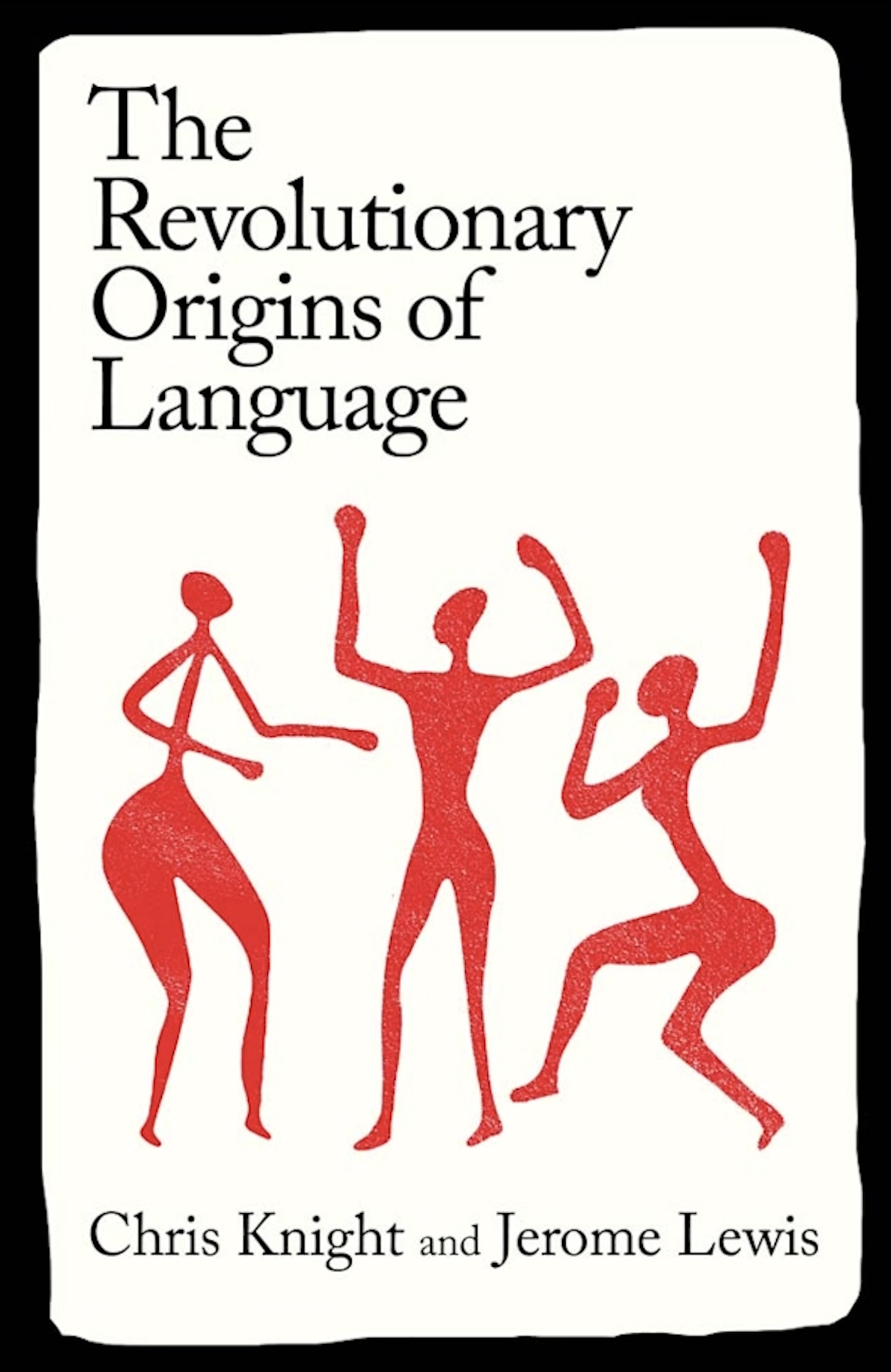
‘Speech is unprecedented in the natural world. Yet human infants can learn the grammar of their native tongue so quickly, it is as if they knew the basics already. How did such a unique ability evolve, and what does it reveal about the nature of our species?
Drawing on evolutionary and social anthropology, behavioural ecology, archaeology, and linguistics, Chris Knight and Jerome Lewis unearth the political and social origins of our capacity to speak. What they discover points to the revolutionary role played by women at every stage. It seems that formidable coalitions of women used laughter, song, and dance to restrain the male potential for violence. In so doing, women established extraordinary levels of community-wide trust—precisely what was needed for linguistic creativity to flourish.’
THE REVOLUTIONARY ORIGINS OF LANGUAGE (Yale University Press)
PRAISE FOR THE REVOLUTIONARY ORIGINS OF LANGUAGE
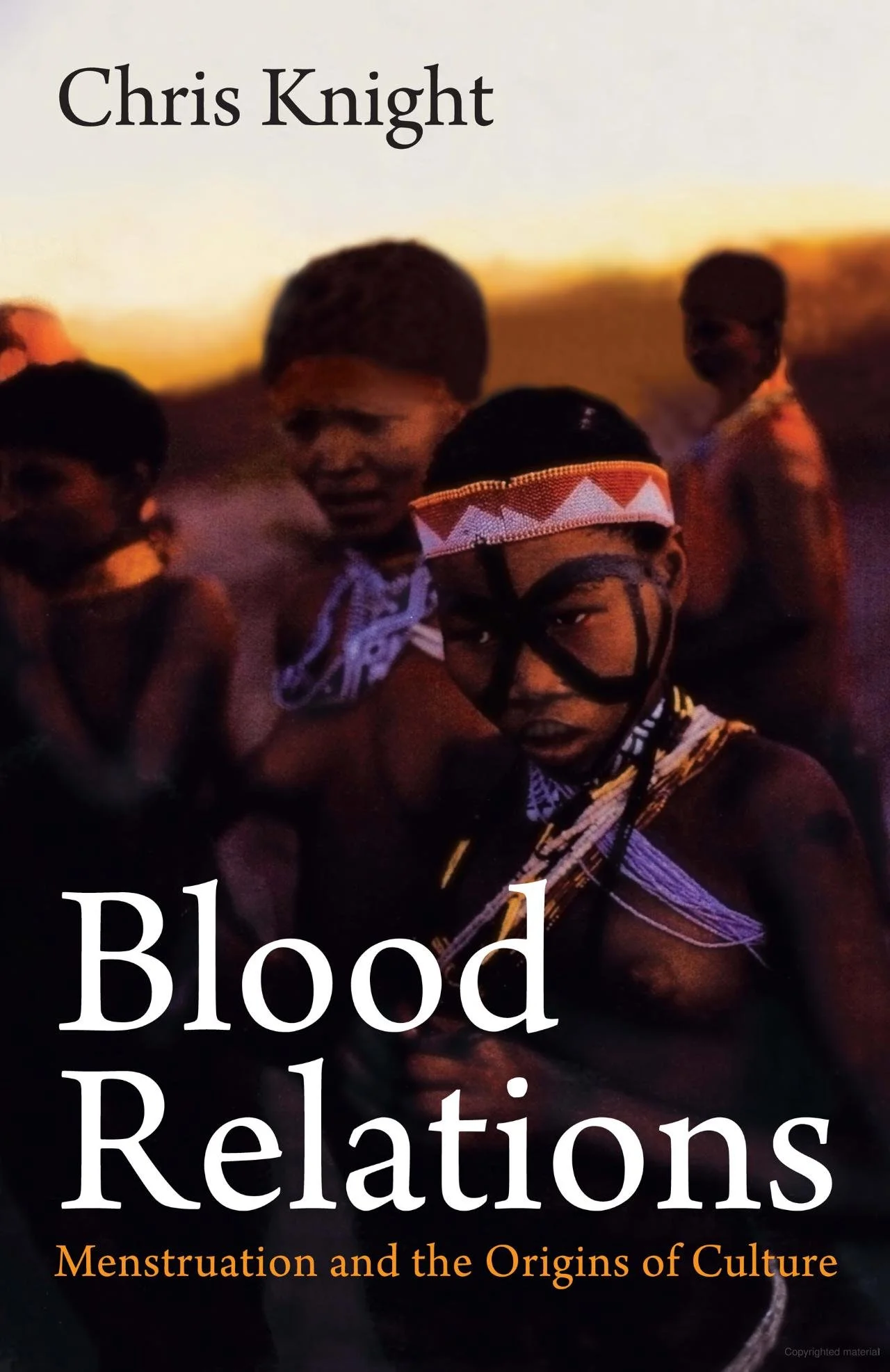
‘This original and ingenious book presents a new theory to explain how symbolic culture came into being. Integrating perspectives of evolutionary biology and social anthropology, Chris Knight rejects the common assumption that human culture was a modified extension of primate behavior and argues instead that it was the product of an immense social, sexual, and political revolution initiated by women.’
BLOOD RELATIONS (Yale University Press)
PRAISE FOR BLOOD RELATIONS
HUMAN EVOLUTION (REVOLUTION)
Chris has spent 50 years studying what it means to be human. Bringing together anthropology, archaeology, primatology and theoretical linguistics, the story he tells begins with Homo erectus some two million years ago and culminates around 160,000 years ago with Homo sapiens in full possession of language and symbolic culture.
MYTHOLOGY & FAIRYTALES
The world’s magical myths and fairy tales are rich with information about how society was structured in ancient times. These stories tell of a world in which life moves endlessly between heaven and earth, life and death, this world and the next — all in keeping with the changes of the moon. Building on the work of Claudé Levi-Strauss, Chris has spent many decades decoding myths and fairytales from around the world to reveal what they tell us about how we became human.
MATRILOCAL RESIDENCE AND THE EVOLUTION OF HOMO ERECTUS
A major step in evolution was taken when young mothers stopped moving away on reaching sexual maturity — the normal pattern for great apes like ourselves — and began choosing instead to keep living at home. ‘Living with mum’ gave mothers more help and gave their babies the positive experience of having a grandmother, increasing their chances of surviving into adulthood. With aunts, sisters and other trusted relatives within reach, the quality of childcare steadily increased. Collective childcare in turn enabled mothers to give birth to and nurture slow-developing babies with increasingly large brains, helping to explain the remarkable achievements of Homo erectus.
RITUAL & RELIGION
An atheist, Chris has always had a deep interest in — and respect for — religion. Underlying all the world’s religions, he suggests, is something of immense value — the idea that some things are sacred. Not everything has a price. Chris argues that women in particular needed to establish the sacredness of their own bodies, and that they did this by marking themselves with red cosmetics symbolic of their blood.
ART & ARCHAEOLOGY
Archaeologists working in Africa have found large residues of red ochre in ancient human camp sites dating back to nearly half a million years ago. They suggest that the first art must have been performance art, with dancers miming the steps of game animals and often using ochre crayons to mark their bodies accordingly.
MOON & MENSTRUATION
In every part of the world, indigenous people connect menstruation with the moon. Chris challenges the idea that it is purely coincidental that the two cycles — moon and menstruation — have the same 29.5-day periodicity. He argues that women found it best to time their cycles by reference to the moon. Menstrual synchrony led to the first monthly rituals — eventually establishing language, culture, sexual morality and the entire symbolic domain.
LANGUAGE & LINGUISTICS
Every child quickly masters the grammar of its natal tongue as if it knew the basics already. Yet if language is in this sense an instinct, it is a strange one because it seems to have come from nowhere. Chimpanzees have a maternal instinct along with aggression, sex and others, but they show absolutely no sign of a grammar instinct. Chris argues that the roots of this uniquely human capacity lie ultimately in the animal instinct for social play. He is currently co-authoring a book to explain how language evolved, The Origins of Language.
“Knight’s theories are controversial but thought-provoking, and speak to the complexity of discerning the historical roots of menstrual stigma.”
INFLUENCING ART & CULTURE
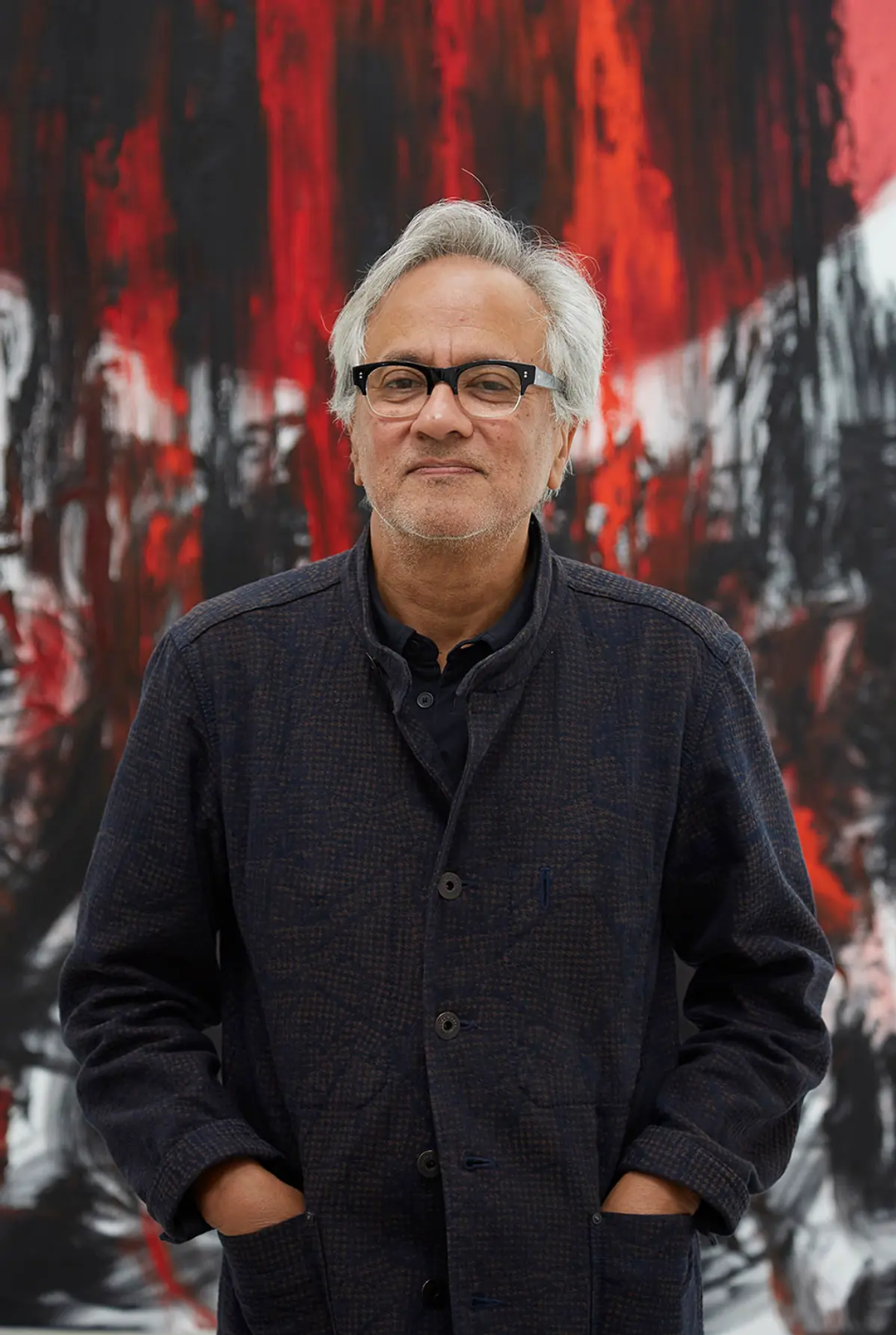
“We have all kinds of theories about drawings in caves. I think they are too late. An anthropologist called Chris Knight proposes a wonderful theory which is that blood is the original matter. That blood is possessed by women not by men because they menstruate, and when women are together they menstruate together, and that we know is a biological truth and a sociological truth.
Women menstruating together means that it is a time of denial of sex to men, and what they did, and there is a lot of evidence to support this, is that they looked for the bleeding earth, and what is the bleeding earth if not red ochre that comes from the earth, and they put it on their bodies to cover up their own bleeding and to create an identification between the bleeding earth and their bleeding bodies. This act of solidarity firstly is a communal act, and then it is only a small step to the ritual dance, to hold these groups of women together…”
— Anish Kapo0r
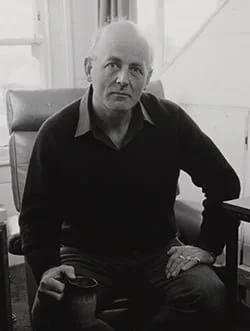
“Chris Knight in Blood Relations has this ‘extraordinary resolve’. His is an immense work of documentation and close argument. For all its obvious risks, the model offers no hypothesis which is not rigorously testable. Not only this, but it appears to solve most of the outstanding conundrums in contemporary anthropology.”
— Peter Redgrove
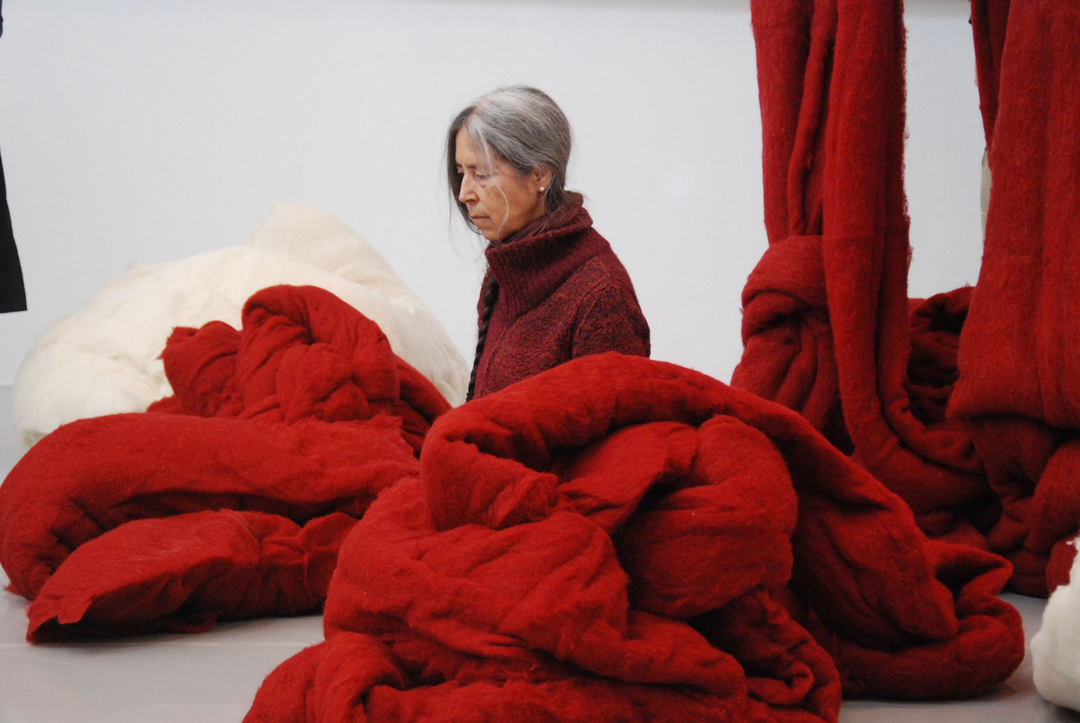
“Chris Knight is an extraordinary author. The depth of his thinking has been strengthening and expanding my own journey that began in Chile with my menstrual paintings in l969, and later on with my menstrual quipus. He gives us the long view, the ancient cultural memory we need to restore our human wholeness.”
— Cecilia Vicuña